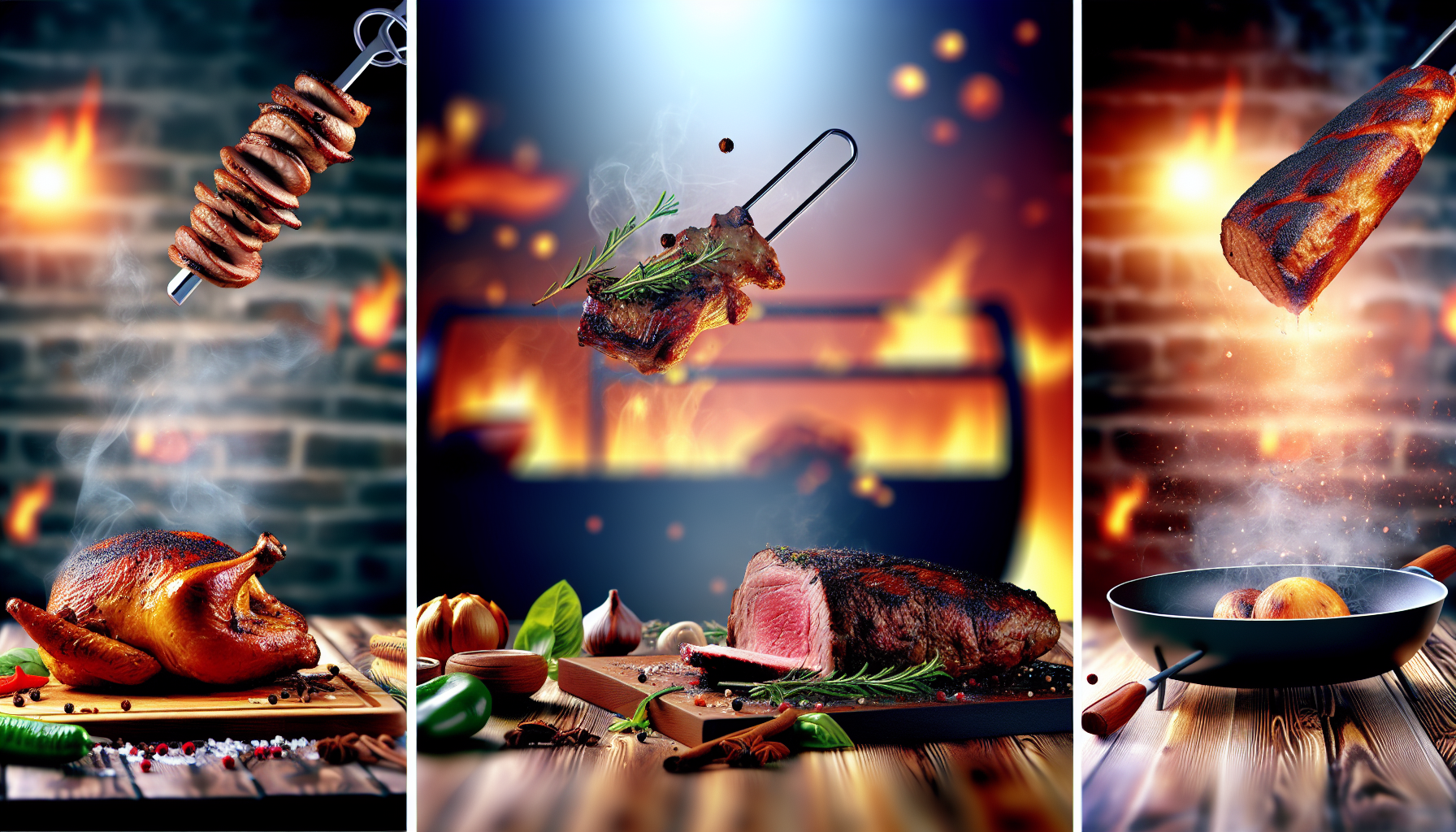
Walk into any steakhouse and you’ll notice something: that distinctive sizzle when a perfectly seared steak hits the table, the crackling skin on a roasted chicken, the char marks on grilled vegetables that somehow make them taste ten times better. These aren’t happy accidents. They’re the result of understanding three fundamental cooking techniques that separate good home cooks from great ones.
Searing, roasting, and grilling might seem straightforward, but each method relies on specific principles of heat, timing, and preparation. Master these techniques and you’ll transform everything from a simple chicken breast to an elaborate holiday roast. The difference between mediocre and exceptional comes down to understanding what’s actually happening to your food when heat meets surface.
The Science Behind the Sizzle
Before diving into specific techniques, you need to understand the Maillard reaction. This chemical process occurs when proteins and sugars in food are exposed to high heat, typically above 300°F. The result? That golden-brown crust, those complex flavors, that irresistible aroma that makes your mouth water.
This reaction is the secret weapon behind all three techniques. Whether you’re searing a steak in a cast-iron skillet, roasting vegetables in a hot oven, or grilling burgers over charcoal, you’re harnessing the same scientific principle. The key is creating the right conditions for this transformation to occur.
Moisture is the enemy of browning. Water on the surface of your food must evaporate before the Maillard reaction can begin. This is why patting proteins dry before cooking isn’t just a suggestion, it’s essential. Every drop of moisture you remove brings you closer to that perfect crust.
Mastering the Art of Searing
Searing is all about creating maximum surface contact with extreme heat. A proper sear locks in a flavorful crust while keeping the interior tender and juicy. The biggest mistake home cooks make? Moving the food too soon.
Getting Your Pan Screaming Hot
Your pan needs to be hot enough that a drop of water immediately sizzles and evaporates on contact. For most stovetops, this means preheating your pan for 3-5 minutes over medium-high to high heat. Cast iron and stainless steel are ideal because they retain heat better than nonstick pans.
Add oil only when the pan is fully heated. The oil should shimmer and move easily across the surface, almost smoking but not quite. This is your signal that the pan is ready. If you add protein to a cold pan with cold oil, you’ll end up steaming instead of searing.
The Hands-Off Approach
Place your protein in the pan and resist the urge to touch it. Seriously. Don’t poke it, don’t press it, don’t flip it. When protein is ready to release from the pan, it will let go naturally. If you try to flip and it sticks, give it another 30 seconds.
For a 1-inch thick steak, you’re looking at 3-4 minutes per side for a good sear. Chicken breasts need about 5-6 minutes on the first side. Fish fillets, being more delicate, typically need 3-4 minutes skin-side down. The food will tell you when it’s ready by releasing easily from the pan surface.
The Basting Technique
Professional chefs use a trick that home cooks often overlook: basting with butter. In the final minute of cooking, add a tablespoon of butter to the pan along with smashed garlic cloves and fresh thyme. Tilt the pan and use a spoon to continuously pour the melted butter over the protein. This adds incredible flavor while helping the top surface cook evenly.
Roasting for Deep, Complex Flavors
Roasting uses dry heat in an enclosed environment to cook food evenly while developing rich, caramelized exteriors. Unlike searing, which happens quickly at very high heat, roasting is a slower process that transforms ingredients from the inside out.
Temperature Matters More Than You Think
Different foods require different roasting temperatures. Root vegetables shine at 425-450°F, where their natural sugars caramelize beautifully. Large cuts of meat often benefit from a two-temperature approach: start high (450°F) for 15-20 minutes to develop crust, then reduce to 325-350°F for gentle, even cooking.
Chicken presents a unique challenge because white and dark meat cook at different rates. The solution? Start the bird breast-side down for the first 30 minutes, then flip it. This protects the delicate breast meat while allowing the thighs and legs to render their fat.
Air Circulation Is Everything
Crowding your roasting pan is a guaranteed way to end up with steamed, pale food instead of roasted, golden perfection. Leave at least an inch of space between items on your pan. This allows hot air to circulate freely, ensuring even cooking and proper browning on all sides.
For vegetables, a single layer is non-negotiable. If you need to roast large quantities, use two sheet pans and rotate their positions halfway through cooking. The extra pan is worth it for the difference in texture and flavor.
The Resting Period
This is where patience pays off. Large roasts need to rest for 15-20 minutes after coming out of the oven. During this time, juices redistribute throughout the meat instead of running all over your cutting board. Cover loosely with foil, but don’t wrap tightly or you’ll steam the crust you worked so hard to create.
Grilling: Fire, Smoke, and Control
Grilling adds a dimension that searing and roasting can’t replicate: smoke. Whether you’re using charcoal, gas, or wood, understanding heat zones and timing transforms grilling from guesswork into precision.
Creating Heat Zones
The single most important grilling concept is the two-zone fire. On a charcoal grill, pile coals on one side, leaving the other empty. On a gas grill, set burners to different temperatures. This gives you a hot zone for searing and a cooler zone for gentle cooking.
Start thick cuts over high heat to develop char and grill marks, then move them to the cooler zone to finish cooking through. This prevents the outside from burning while the inside remains raw. Thin cuts like fish fillets or vegetables can often be cooked entirely over medium heat.
The Lid Debate
Knowing when to grill with the lid up or down separates average grillers from experts. Lid down turns your grill into an oven, cooking food from all sides with circulating heat. This works beautifully for thicker cuts, whole chickens, or anything that needs more than 10 minutes of cooking time.
Lid up is best for thin, quick-cooking items: burgers, hot dogs, thin steaks, or vegetables. You want direct heat and you want to watch them closely. Leaving the lid up also gives you better control over flare-ups from dripping fat.
Managing Flare-Ups
Fat dripping onto hot coals or burners causes flames to shoot up around your food. These flare-ups can char the outside while leaving the inside undercooked. When flames appear, move food to the cooler zone until they subside. Keep a spray bottle of water nearby for charcoal grills, but use it sparingly. Too much water creates ash that sticks to your food.
Knowing When It’s Done
Invest in an instant-read thermometer and learn these numbers: 145°F for medium-rare beef and lamb, 160°F for medium pork, 165°F for all poultry. Insert the thermometer into the thickest part of the meat, avoiding bone, which conducts heat differently than muscle.
For fish, the thermometer should read 145°F, but you can also use the flake test. Gently press a fork into the thickest part and twist slightly. If the fish flakes easily and is opaque throughout, it’s done. Vegetables are ready when they’re tender with visible char marks.
Common Mistakes to Avoid
Even experienced cooks fall into these traps. Recognizing them helps you avoid the frustration of food that looks perfect but tastes disappointing.
Not Preheating Properly
Whether it’s a pan, oven, or grill, inadequate preheating undermines everything else you do right. Your oven needs at least 15 minutes after it beeps to reach true temperature. Grills need 10-15 minutes with the lid closed. Pans need those crucial 3-5 minutes over heat. This isn’t wasted time, it’s essential preparation.
Using the Wrong Oil
Each cooking oil has a smoke point, the temperature at which it begins to break down and taste burnt. For high-heat searing, use oils with high smoke points: avocado oil (520°F), refined safflower oil (510°F), or grapeseed oil (420°F). Save olive oil for medium-heat cooking or finishing.
Overcrowding
This deserves repeating because it’s so common. Whether you’re searing in a pan or roasting on a sheet, cramming too much food into too little space creates steam instead of the dry heat you need for browning. Cook in batches if necessary. The extra time is worth the dramatically better results.
Constant Flipping
Patience is hard when you’re standing over a hot grill or stove, but constant flipping prevents proper crust formation. Most proteins only need to be flipped once. The exception is burgers, which some chefs flip every 30 seconds for more even cooking, but this is an advanced technique that requires careful attention.
Temperature Control Strategies
Professional kitchens obsess over temperature because it’s the difference between good and great. You don’t need professional equipment, just awareness and the right tools.
The Reverse Sear Method
For thick steaks, the reverse sear produces the most even cooking from edge to edge. Start the steak in a low oven (275°F) until it reaches about 10-15 degrees below your target temperature. Then sear it hard and fast in a smoking-hot pan for 60-90 seconds per side. This gives you a perfect crust with a uniformly pink interior.
Resting Meat Properly
Small cuts need 5-10 minutes of rest. Large roasts need 15-20 minutes. During this time, the internal temperature actually continues to rise by 5-10 degrees, a phenomenon called carryover cooking. Factor this into your timing by removing food from heat when it’s 5 degrees below your target temperature.
Bringing It All Together
Searing, roasting, and grilling aren’t separate skills, they’re complementary techniques that often work together. A perfectly cooked chicken might start with a sear, continue in the oven for roasting, and finish with a few minutes on the grill for smoky flavor.
The real secret isn’t memorizing temperatures or timing charts. It’s understanding the principles: heat creates flavor through browning, moisture prevents browning, and different cooking methods excel at different tasks. Once you grasp these concepts, you can adapt to any recipe, any ingredient, any situation.
Start with one technique and practice until it becomes second nature. Sear a steak until you can judge doneness by touch. Roast vegetables until you know exactly how they should look and smell when they’re perfect. Grill burgers until you can manage heat zones without thinking. Then combine these skills and watch your cooking transform from following recipes to creating restaurant-quality meals with confidence.

Leave a Reply